
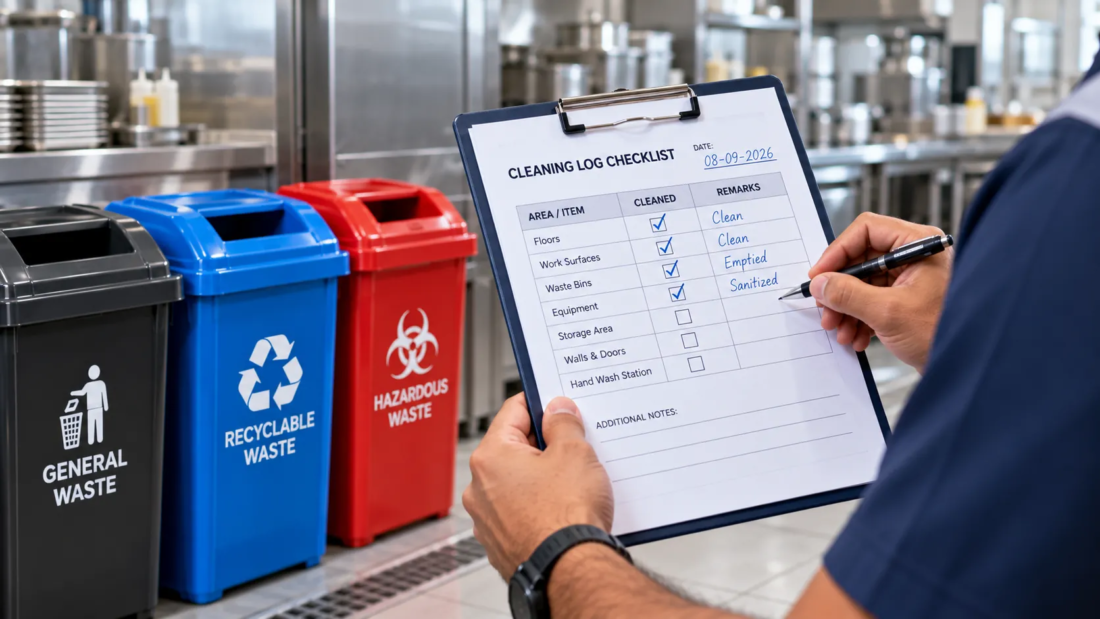
"Dubai Municipality cleaning inspection checklist on a clipboard

Dubai Municipality Cleaning Inspection: 5 Costly Errors to Avoid

Introduction

Dubai Municipality cleaning inspection checks something you can’t judge just by looking around a room: your paperwork. A perfectly clean office, restaurant, or facility can still fail inspection if it can’t produce written proof of when it was cleaned, how waste was handled, and who did the work.
This gap between “looks clean” and “is compliant” catches many business owners off guard usually during a surprise visit, when there’s no time to prepare. This guide covers exactly what happens during a Dubai Municipality cleaning inspection, what it means when a business falls short, and how to build a system that stays compliant year-round.

What a Dubai Municipality Cleaning Inspection Actually Checks

Documented Cleaning Schedules

Dubai Municipality requires commercial premises to maintain written daily, weekly, and monthly cleaning logs. It’s not enough to clean regularly the business must be able to produce records showing exactly when each area was cleaned, by whom, and using what products. Inspectors can request these logs without advance notice.

Approved Chemicals and Products

Cleaning products used on-site must carry UAE conformity marks, and disinfectant and bleach concentrations must comply with Dubai Municipality specifications. Using unapproved or improperly diluted products is a compliance issue even if the space appears clean.

Trained and Certified Staff

Cleaning personnel are expected to hold valid hygiene training certificates, with many facilities requiring HABC or equivalent qualifications. Inspectors may ask for proof that staff performing cleaning duties have been properly trained, not just assigned the task informally.

Waste Segregation

General waste, recyclable materials, and hazardous waste must be kept in separate, clearly identified streams under Dubai’s waste management regulations. Mixing hazardous waste such as chemical residue, medical waste, or grease trap byproducts with general waste is treated as a serious violation, not a minor oversight. (You can review the official categories on the Dubai Municipality website.)

Why a Cleaning Inspection Catches Businesses Off Guard

Inspections Are Unannounced

Unlike scheduled audits, a Dubai Municipality cleaning inspection can happen without prior notice. A business that only tidies up documentation before a known inspection date will still be caught short during a surprise visit.

Cleanliness and Compliance Are Not the Same Thing

A visibly spotless kitchen or office can still fail if the paperwork behind that cleanliness doesn’t exist. Inspectors are verifying a system, not just a result which means the process matters as much as the outcome.

Record-Keeping Gets Deprioritized

For many businesses, cleaning itself is treated as essential while the documentation around it is treated as optional paperwork. In practice, missing or incomplete records are one of the most common reasons businesses fail a cleaning inspection, even when actual hygiene standards are reasonably high.

The Real Cost of Non-Compliance

Fines Starting at AED 1,000

Businesses that cannot produce documented cleaning schedules during an inspection face fines starting at AED 1,000, with the amount potentially increasing for repeat violations or more serious breaches such as improper hazardous waste handling.

Follow-Up Inspections

A failed inspection typically triggers a follow-up visit to verify corrective action has been taken. This adds ongoing pressure and scrutiny to daily operations until the business demonstrates sustained compliance.

Temporary Closure Risk

In more serious cases particularly where hygiene violations pose a direct health risk, such as food service environments non-compliance can result in temporary closure until the issue is resolved and re-verified by inspectors.

Reputational and Contractual Impact

For businesses operating in commercial buildings, hotels, or facilities with corporate clients, compliance records are often requested as part of contracts or lease agreements. A poor inspection history can affect these relationships well beyond the fine itself.

Building a Compliance System That Actually Holds Up

Maintain Written, Dated Cleaning Logs

Every cleaning task daily, weekly, and monthly should be logged with the date, area cleaned, method used, and the name of the person responsible. Digital logs are acceptable, but they must be readily accessible and produced on request.

Separate Waste Streams Clearly

General, recyclable, and hazardous waste should be stored in clearly labeled, separate containers, with hazardous waste handled according to Dubai’s specific disposal regulations rather than treated as general refuse. The UAE government’s waste management guidance outlines the categories in more detail.

Use Only Approved Cleaning Products

Confirm that all cleaning chemicals and disinfectants used on-site carry UAE conformity marks and meet Dubai Municipality’s specified concentration standards, and keep supplier documentation on file as proof.

Verify Staff Training and Certification

Ensure cleaning staff hold valid, up-to-date hygiene training certificates, and keep copies of these certifications accessible alongside cleaning logs in case they’re requested during an inspection.

Schedule Regular Internal Audits

Rather than waiting for a municipality visit to discover gaps, periodic internal reviews of logs, waste handling, and product compliance help catch and correct issues before they become violations. Our commercial cleaning services build this auditing step into every ongoing contract.

Who Faces the Highest Risk During a Cleaning Inspection

Restaurants, hotels, and food service facilities

face the highest scrutiny, given the direct link between cleaning compliance and food safety, and are among the most frequently inspected categories.

Offices and Commercial Buildings

are increasingly asked to provide compliance documentation as part of facility audits, especially in larger commercial towers.

Warehouses and Industrial Facilities

face particular scrutiny around hazardous waste segregation and disposal documentation, given the volume and variety of waste generated. Enron’s waste management services are built around exactly this kind of documentation.

Healthcare and Educational Facilities

operate under heightened hygiene expectations, making thorough documentation especially critical in these environments.

Conclusion

A clean-looking space and one that passes a Dubai Municipality cleaning inspection are not always the same thing. Inspectors are verifying the system behind the cleanliness documented schedules, approved products, trained staff, and proper waste segregation not just the visible result. Businesses that treat documentation as seriously as the cleaning itself are far less likely to face fines, follow-up inspections, or closure risk.
Enron Cleaning Company in Dubai helps businesses stay genuinely compliant, not just clean on the surface, with documented cleaning schedules, proper waste segregation, and Municipality-approved standards built into every service. Contact Enron to set up a compliance-ready cleaning programme for your business.

FAQ

How much does professional compliance cleaning cost in Dubai?

Pricing varies by facility size, frequency, and industry (food service and healthcare typically cost more due to stricter documentation requirements), but most providers offer a free walkthrough to quote a monthly rate before you commit.

How often does Dubai Municipality actually inspect a typical business?

There’s no fixed public schedule inspections are risk-based and unannounced, with higher-risk categories like restaurants and healthcare facilities inspected more frequently than standard offices.

What’s the difference between a cleaning company and a facilities management company for compliance purposes?

 A cleaning company focuses specifically on cleaning execution and documentation, while a facilities management company bundles cleaning with maintenance, security, and other building services for pure inspection compliance, a specialized cleaning provider is usually the more cost-effective choice.

Can I switch cleaning providers without losing my compliance history?

 Yes, as long as your previous logs and certifications are stored digitally or handed over in writing; a new provider can pick up the documentation trail as long as records weren’t only kept informally.

Does a Dubai Municipality cleaning inspection cover pest control as well?

Pest control is typically assessed separately under its own regulations, but inspectors may flag visible pest issues during a cleaning inspection if they suggest a broader hygiene or waste-handling problem.
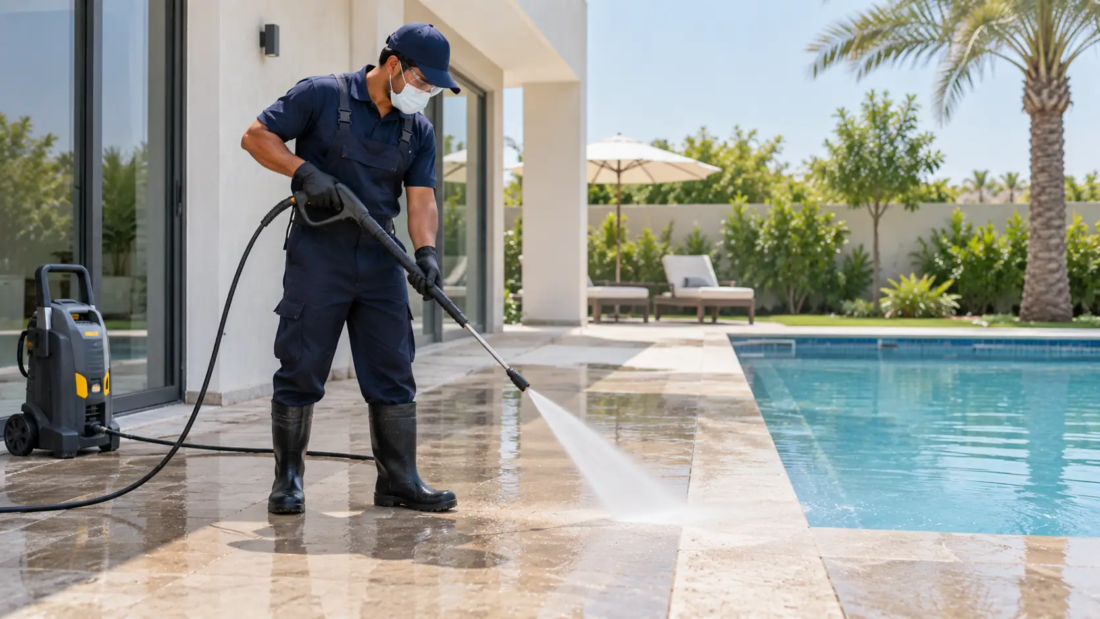


pool deck cleaning Dubai villa pressure washing

Pool Deck Cleaning Dubai: 7 Essential Maintenance Tips

Pool deck cleaning Dubai villa owners often push to the bottom of their maintenance list, focusing instead on the pool water itself. But the deck and surrounding area the stone, tile, or interlock paving around the pool faces its own set of problems: algae growth, mineral staining, slip hazards, and sun damage that build up quietly until they become expensive to fix.

A pool that looks crystal clear can still be sitting inside a deck area that’s slippery, stained, or gradually deteriorating. For villa owners, treating the pool deck as part of the same maintenance routine as the water itself protects both safety and property value.

Why Pool Deck Cleaning Dubai Villas Need Is Different From Regular Outdoor Cleaning

Dubai’s climate creates specific challenges for pool deck surfaces:

  • Intense sun and heat accelerate fading, cracking, and material degradation on decks, particularly natural stone and painted surfaces
  • Splashed pool water carries chlorine and mineral deposits that stain and etch surfaces over time
  • Humidity around the pool area encourages algae and mold growth in shaded or poorly drained sections
  • Fine desert dust settles on deck surfaces constantly, mixing with moisture to create slippery grime

Remove Algae and Mold From Shaded Areas

Shaded sections of a pool deck, or areas near landscaping, tend to stay damp longer and develop algae or mold first. Regular pool deck cleaning Dubai homeowners schedule should specifically target these zones with appropriate anti-algae treatments, not just general rinsing.

Address Mineral and Chlorine Staining

Splashed pool water leaves behind mineral deposits and chlorine residue that gradually discolor deck surfaces, especially natural stone and light-colored tiles. This is one of the most common issues pool deck cleaning Dubai homeowners deal with, since left untreated, these stains become increasingly difficult to remove and can permanently dull the deck’s appearance.

Pressure Wash to Remove Embedded Grime

Standard mopping or hosing down a deck often isn’t enough to remove grime embedded in textured stone, interlock pavers, or grout lines. Professional pressure washing lifts dirt, algae, and staining from deep within the surface texture without damaging the material, when done at the correct pressure and technique for each surface type.

Reseal Natural Stone and Porous Surfaces Periodically

Many pool decks use natural stone or porous materials that require periodic resealing to stay water- and stain-resistant. Without resealing, these surfaces absorb pool chemicals and moisture more readily, accelerating staining and surface degradation.

Check and Clean Deck Drainage

Poor drainage around a pool deck allows water to pool in low spots, creating standing water that breeds algae, attracts insects, and accelerates surface wear. Pool deck cleaning Dubai maintenance routines should include checking that drainage channels and slopes are clear and functioning properly.

Clean and Maintain Interlock or Paver Surfaces

Interlock and paver pool decks are prone to weed growth between joints and loosening over time if not properly maintained. Professional interlock cleaning restores color, removes moss and algae from joints, and applies protective treatments that reduce regrowth — extending the life of the paving significantly.

Address Slip Hazards Before They Cause Injury

A pool deck accumulating algae, grime, or fine dust becomes a genuine safety hazard, particularly around a wet pool edge. Regular pool deck cleaning Dubai villa owners keep up with reduces slip risk far more effectively than occasional rinsing, which often just spreads grime rather than removing it.

Building a Pool Deck Maintenance Schedule

  • Weekly: rinse down the deck to remove loose dust and debris
  • Monthly: spot-treat any visible algae, mold, or staining
  • Quarterly: professional pressure washing of the full deck area
  • Annually: inspect and reseal natural stone or porous surfaces as needed

Don’t Forget the Surrounding Area

Pool deck cleaning Dubai villa owners plan for shouldn’t stop at the paving itself. The broader pool surrounding area also needs regular attention:

  • Outdoor furniture should be wiped down and cleaned to remove dust, sun damage residue, and mildew, which Enron’s house cleaning services can include as part of a broader outdoor maintenance visit
  • Pool fencing and railings should be checked for rust or corrosion from chlorine exposure
  • Landscaping near the deck should be trimmed back to reduce shade that encourages algae growth
  • Pool equipment areas should stay clear of debris that could affect filtration systems

Should You Hire a Professional for Pool Deck Cleaning Dubai Villas Need?

While light maintenance can be handled in-house, professional service is generally worth it for:

  • Larger deck areas that would take significant time to clean thoroughly by hand
  • Natural stone or specialty surfaces requiring specific cleaning products and techniques
  • Deep-set algae or staining that basic rinsing can’t remove
  • Coordinating deck maintenance alongside swimming pool cleaning services for a fully maintained pool area rather than treating the water and the deck as separate tasks

The Bottom Line

Pool deck cleaning Dubai villa owners keep up with protects more than appearances — it prevents slip hazards, stops permanent staining, and extends the life of expensive stone and paver surfaces exposed to constant sun and pool chemical splash. Building deck maintenance into the same routine as pool water care, rather than treating it as an afterthought, keeps the entire pool area safe and presentable year-round. For general guidance on pool area safety, the CDC’s healthy swimming resource covers broader pool hygiene and safety principles that extend to surrounding deck areas as well.

If your pool deck hasn’t been deep cleaned in the last few months, it’s worth scheduling a professional assessment before staining or slip hazards become more serious.

FAQ

How often should a pool deck be professionally cleaned?

Most villa pool decks benefit from quarterly professional pressure washing, in addition to weekly rinsing and monthly spot treatment for algae or staining.

Why does my pool deck get slippery even when it looks clean?

A fine layer of algae, dust, or mineral residue can build up gradually and isn’t always visually obvious, but it significantly increases slip risk, especially near the pool edge.

Does natural stone need different care than interlock or tile pool decks?

Yes. Natural stone often requires periodic resealing to resist staining, while interlock and tile surfaces need attention to grout lines and joints where algae and weeds tend to develop.

Can I pressure wash my pool deck myself?

It’s possible for small areas, but incorrect pressure or technique can damage certain stone or paver surfaces, which is why professional service is recommended for larger or more delicate deck areas.

Should pool deck cleaning be scheduled alongside pool water cleaning?

Yes, coordinating both keeps the entire pool area consistently maintained rather than addressing the water and the surrounding surfaces on separate, easily forgotten timelines.

Enron provides professional swimming pool cleaning, interlock and paver cleaning, and outdoor maintenance services for villas across Dubai. Contact us to build a complete pool area maintenance plan.

Industrial Hygiene: A Complete Guide

Industrial Hygiene: A Complete Guide to Creating Safe and Healthy Workplaces

Workplace safety is a critical aspect of every industry. Whether it is a manufacturing facility, warehouse, construction site, laboratory, or commercial establishment, employees are exposed to various environmental hazards that can affect their health and productivity. This is where industrial hygiene plays an important role.

Industrial hygiene focuses on identifying, evaluating, and controlling workplace hazards that may cause illness, injury, or discomfort. By implementing proper industrial hygiene practices, organizations can create safer working environments, improve employee wellbeing, and comply with health and safety regulations.

This comprehensive guide explains what industrial hygiene is, why it is important, its key components, common workplace hazards, and best practices for maintaining a healthy industrial environment.

What Is Industrial Hygiene?

Industrial hygiene is the science and practice of anticipating, recognizing, evaluating, and controlling workplace environmental factors that may negatively affect workers’ health.

The primary goal of industrial hygiene is to prevent occupational illnesses and create a safe work environment.

Industrial hygiene professionals assess workplace conditions and implement measures to reduce exposure to hazards such as:

  • Dust
  • Chemicals
  • Noise
  • Biological contaminants
  • Heat stress
  • Poor ventilation
  • Ergonomic risks

Industrial hygiene is an essential part of workplace health and safety management.

Why Is Industrial Hygiene Important?

Employees spend a significant portion of their lives at work. Exposure to harmful workplace conditions can lead to both short-term and long-term health issues.

Industrial hygiene helps organisations:

  • Protect employee health
  • Reduce workplace accidents
  • Improve productivity
  • Maintain regulatory compliance
  • Lower healthcare costs
  • Minimize absenteeism
  • Enhance workplace morale

A healthy workforce contributes to improved operational efficiency and business performance.

Objectives of Industrial Hygiene

Industrial hygiene programs aim to:

Identify Hazards

Recognise potential health risks in the workplace.

Assess Exposure

Evaluate the level of employee exposure to harmful substances or conditions.

Control Risks

Implement measures to eliminate or reduce workplace hazards.

Monitor Conditions

Continuously review workplace environments to ensure ongoing safety.

Promote Worker Health

Create conditions that support long-term employee wellbeing.

Common Workplace Hazards Addressed by Industrial Hygiene

Industrial hygiene focuses on a variety of hazards that can affect workers.

1. Chemical Hazards

Chemical exposure is one of the most common industrial hygiene concerns.

Examples include:

Workers exposed to hazardous chemicals may experience respiratory issues, skin irritation, or long-term health complications.

Prevention Measures

  • Proper storage of chemicals
  • Use of protective equipment
  • Adequate ventilation
  • Employee training

2. Physical Hazards

Physical hazards are environmental factors that can affect employee health.

Examples include:

  • Excessive noise
  • Vibration
  • Radiation
  • Extreme temperatures
  • Poor lighting

Long-term exposure can result in hearing loss, stress, fatigue, and other health issues.

Prevention Measures

  • Noise control systems
  • Hearing protection
  • Temperature regulation
  • Workplace monitoring

3. Biological Hazards

Biological hazards involve exposure to living organisms or biological materials.

Examples include:

  • Bacteria
  • Viruses
  • Mold
  • Fungi
  • Wastewater contaminants

These hazards are common in healthcare facilities, waste management operations, and food processing environments.

Prevention Measures

  • Proper sanitation
  • Disinfection procedures
  • Personal protective equipment
  • Waste management programs

4. Ergonomic Hazards

Ergonomic hazards arise from repetitive motions, poor workstation design, or improper lifting techniques.

Examples include:

  • Repetitive strain injuries
  • Back pain
  • Musculoskeletal disorders

Prevention Measures

  • Ergonomic workstations
  • Employee training
  • Proper lifting techniques
  • Equipment adjustments

5. Air Quality Hazards

Poor indoor air quality can negatively affect worker health and productivity.

Sources include:

  • Dust
  • Smoke
  • Chemical vapors
  • Poor ventilation

Prevention Measures

  • Ventilation systems
  • Air filtration
  • Regular cleaning
  • Dust control measures

Key Elements of an Industrial Hygiene Program

A successful industrial hygiene program consists of several essential components.

Hazard Identification

The first step is identifying potential workplace hazards.

This may involve:

  • Workplace inspections
  • Risk assessments
  • Employee feedback
  • Safety audits

Early identification helps prevent future problems.

Exposure Assessment

Industrial hygienists measure worker exposure levels using specialized equipment.

Assessments may include:

  • Air quality monitoring
  • Noise level testing
  • Chemical exposure measurements

The collected data helps determine whether corrective actions are necessary.

Risk Control Measures

After identifying hazards, organizations must implement controls.

The hierarchy of controls typically includes:

Elimination

Remove the hazard entirely.

Substitution

Replace hazardous materials with safer alternatives.

Engineering Controls

Use equipment or system modifications to reduce exposure.

Administrative Controls

Implement workplace procedures and training.

Personal Protective Equipment (PPE)

Provide workers with protective gear when necessary.

Workplace Monitoring

Regular monitoring ensures safety measures remain effective.

Monitoring may include:

  • Air quality testing
  • Noise assessments
  • Equipment inspections
  • Environmental evaluations

Continuous monitoring supports long-term workplace health.

The Role of Cleaning in Industrial Hygiene

Professional cleaning plays a vital role in maintaining industrial hygiene standards.

Dust, waste materials, chemical residues, and contaminants can accumulate in industrial facilities over time.

Regular cleaning helps:

  • Improve air quality
  • Reduce contamination risks
  • Minimize slip and fall hazards
  • Enhance workplace safety
  • Maintain equipment efficiency

Industrial cleaning is often a key component of a comprehensive industrial hygiene strategy.

Industrial Hygiene in Manufacturing Facilities

Manufacturing environments often contain numerous workplace hazards.

Common concerns include:

  • Dust generation
  • Machinery noise
  • Chemical exposure
  • Heat stress
  • Industrial waste

Effective industrial hygiene programs help protect workers while ensuring smooth production operations.

Industrial Hygiene in Warehouses

Warehouses may appear less hazardous than factories, but they still present several risks.

Examples include:

  • Dust accumulation
  • Poor ventilation
  • Equipment emissions
  • Ergonomic strain

Regular cleaning and workplace monitoring help maintain a safer environment.

Benefits of Industrial Hygiene

Organisations that invest in industrial hygiene often experience significant advantages.

Improved Employee Health

Reduced exposure to harmful conditions helps prevent occupational illnesses.

Increased Productivity

Healthy employees are generally more productive and focused.

Reduced Absenteeism

Fewer health-related issues result in lower absenteeism rates.

Enhanced Regulatory Compliance

Industrial hygiene programs help businesses meet workplace safety requirements.

Lower Operating Costs

Preventing accidents and illnesses reduces medical expenses and compensation claims.

Industrial Hygiene and UAE Workplaces

The UAE’s industrial sector includes manufacturing plants, logistics facilities, warehouses, construction sites, and processing plants.

Environmental conditions such as:

  • High temperatures
  • Dust exposure
  • Industrial activity

can increase workplace hygiene challenges.

Regular industrial cleaning, proper ventilation, and hazard monitoring are essential for maintaining healthy work environments across the UAE.

Businesses that prioritise industrial hygiene often achieve better safety performance and operational efficiency.

How Enron Supports Industrial Hygiene Standards

Maintaining industrial hygiene requires more than safety procedures; it also requires professional cleaning and facility maintenance.

Enron provides industrial cleaning solutions designed to support workplace hygiene and safety standards across Dubai and the UAE.

Services may include:

  • Industrial facility cleaning
  • Warehouse cleaning
  • Waste management support
  • Deep cleaning services
  • High-level cleaning
  • Environmental cleaning

By helping businesses maintain cleaner and safer environments, Enron supports industrial hygiene initiatives that protect employees and improve workplace conditions. As the best cleaning company in UAE, Enron is here for the complete solution.

Best Practices for Maintaining Industrial Hygiene

Organizations can strengthen their industrial hygiene programs by:

  • Conducting regular workplace inspections
  • Implementing hazard control measures
  • Providing employee training
  • Maintaining proper ventilation
  • Scheduling routine industrial cleaning
  • Monitoring workplace conditions
  • Encouraging safety awareness

A proactive approach helps prevent health risks before they become serious problems.

Conclusion

Industrial hygiene is a vital component of workplace health and safety. By identifying, evaluating, and controlling environmental hazards, businesses can create safer and healthier environments for employees.

From managing chemical exposure and air quality to implementing proper cleaning and waste management practices, industrial hygiene helps reduce risks while improving productivity and compliance.

For industries across the UAE, maintaining strong industrial hygiene standards is essential for protecting workers, supporting operational efficiency, and building a culture of safety. Through regular monitoring, preventive measures, and professional cleaning support, organizations can ensure healthier workplaces throughout the year.