

Introduction
Dubai Municipality cleaning inspection checks something you can’t judge just by looking around a room: your paperwork. A perfectly clean office, restaurant, or facility can still fail inspection if it can’t produce written proof of when it was cleaned, how waste was handled, and who did the work.
This gap between “looks clean” and “is compliant” catches many business owners off guard usually during a surprise visit, when there’s no time to prepare. This guide covers exactly what happens during a Dubai Municipality cleaning inspection, what it means when a business falls short, and how to build a system that stays compliant year-round.
What a Dubai Municipality Cleaning Inspection Actually Checks
Documented Cleaning Schedules
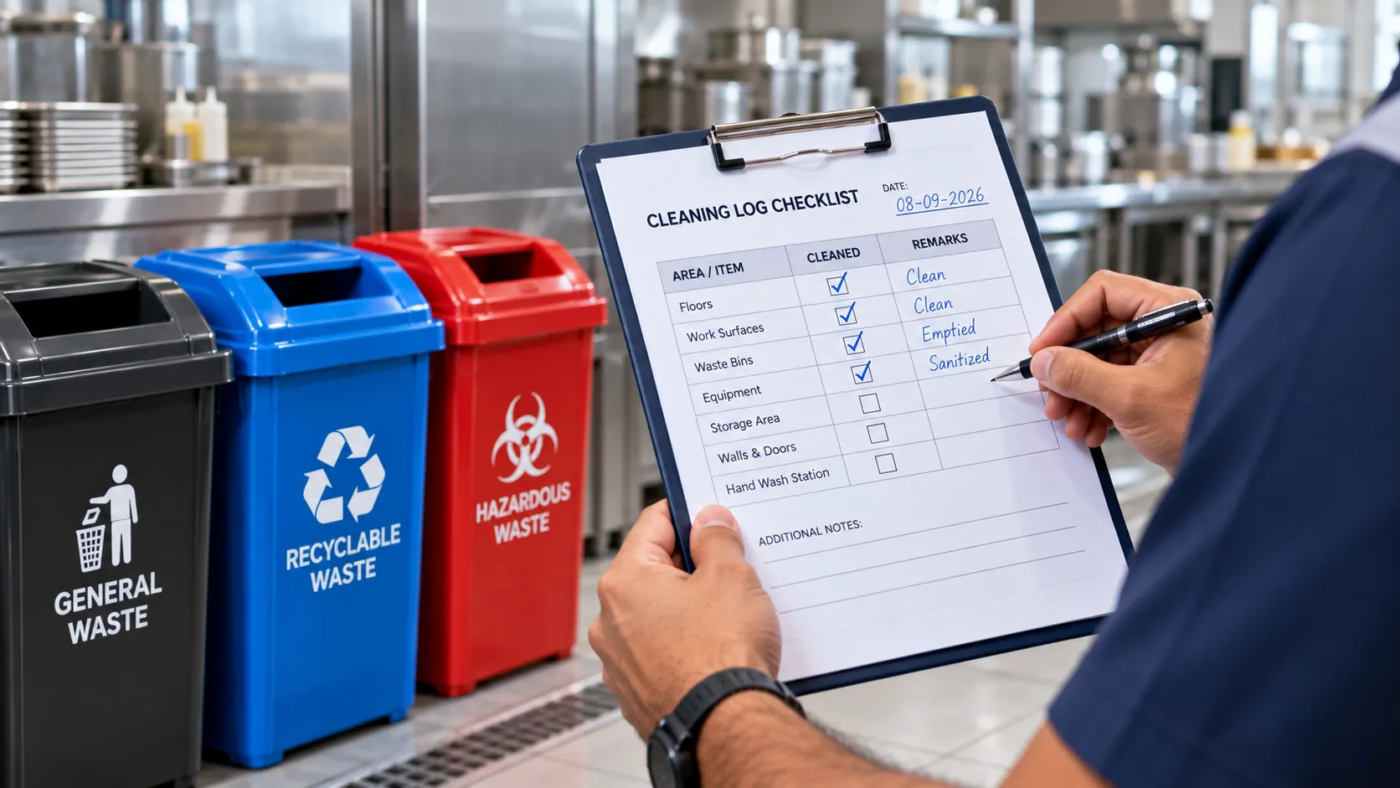
Dubai Municipality requires commercial premises to maintain written daily, weekly, and monthly cleaning logs. It’s not enough to clean regularly the business must be able to produce records showing exactly when each area was cleaned, by whom, and using what products. Inspectors can request these logs without advance notice.
Approved Chemicals and Products
Cleaning products used on-site must carry UAE conformity marks, and disinfectant and bleach concentrations must comply with Dubai Municipality specifications. Using unapproved or improperly diluted products is a compliance issue even if the space appears clean.
Trained and Certified Staff
Cleaning personnel are expected to hold valid hygiene training certificates, with many facilities requiring HABC or equivalent qualifications. Inspectors may ask for proof that staff performing cleaning duties have been properly trained, not just assigned the task informally.
Waste Segregation
General waste, recyclable materials, and hazardous waste must be kept in separate, clearly identified streams under Dubai’s waste management regulations. Mixing hazardous waste such as chemical residue, medical waste, or grease trap byproducts with general waste is treated as a serious violation, not a minor oversight. (You can review the official categories on the Dubai Municipality website.)
Why a Cleaning Inspection Catches Businesses Off Guard
Inspections Are Unannounced
Unlike scheduled audits, a Dubai Municipality cleaning inspection can happen without prior notice. A business that only tidies up documentation before a known inspection date will still be caught short during a surprise visit.
Cleanliness and Compliance Are Not the Same Thing
A visibly spotless kitchen or office can still fail if the paperwork behind that cleanliness doesn’t exist. Inspectors are verifying a system, not just a result which means the process matters as much as the outcome.
Record-Keeping Gets Deprioritized
For many businesses, cleaning itself is treated as essential while the documentation around it is treated as optional paperwork. In practice, missing or incomplete records are one of the most common reasons businesses fail a cleaning inspection, even when actual hygiene standards are reasonably high.
The Real Cost of Non-Compliance
Fines Starting at AED 1,000
Businesses that cannot produce documented cleaning schedules during an inspection face fines starting at AED 1,000, with the amount potentially increasing for repeat violations or more serious breaches such as improper hazardous waste handling.
Follow-Up Inspections
A failed inspection typically triggers a follow-up visit to verify corrective action has been taken. This adds ongoing pressure and scrutiny to daily operations until the business demonstrates sustained compliance.
Temporary Closure Risk
In more serious cases particularly where hygiene violations pose a direct health risk, such as food service environments non-compliance can result in temporary closure until the issue is resolved and re-verified by inspectors.
Reputational and Contractual Impact
For businesses operating in commercial buildings, hotels, or facilities with corporate clients, compliance records are often requested as part of contracts or lease agreements. A poor inspection history can affect these relationships well beyond the fine itself.
Building a Compliance System That Actually Holds Up
Maintain Written, Dated Cleaning Logs
Every cleaning task daily, weekly, and monthly should be logged with the date, area cleaned, method used, and the name of the person responsible. Digital logs are acceptable, but they must be readily accessible and produced on request.
Separate Waste Streams Clearly
General, recyclable, and hazardous waste should be stored in clearly labeled, separate containers, with hazardous waste handled according to Dubai’s specific disposal regulations rather than treated as general refuse. The UAE government’s waste management guidance outlines the categories in more detail.
Use Only Approved Cleaning Products
Confirm that all cleaning chemicals and disinfectants used on-site carry UAE conformity marks and meet Dubai Municipality’s specified concentration standards, and keep supplier documentation on file as proof.
Verify Staff Training and Certification
Ensure cleaning staff hold valid, up-to-date hygiene training certificates, and keep copies of these certifications accessible alongside cleaning logs in case they’re requested during an inspection.
Schedule Regular Internal Audits
Rather than waiting for a municipality visit to discover gaps, periodic internal reviews of logs, waste handling, and product compliance help catch and correct issues before they become violations. Our commercial cleaning services build this auditing step into every ongoing contract.
Who Faces the Highest Risk During a Cleaning Inspection
Restaurants, hotels, and food service facilities
face the highest scrutiny, given the direct link between cleaning compliance and food safety, and are among the most frequently inspected categories.
Offices and Commercial Buildings
are increasingly asked to provide compliance documentation as part of facility audits, especially in larger commercial towers.
Warehouses and Industrial Facilities
face particular scrutiny around hazardous waste segregation and disposal documentation, given the volume and variety of waste generated. Enron’s waste management services are built around exactly this kind of documentation.
Healthcare and Educational Facilities
operate under heightened hygiene expectations, making thorough documentation especially critical in these environments.
Conclusion
A clean-looking space and one that passes a Dubai Municipality cleaning inspection are not always the same thing. Inspectors are verifying the system behind the cleanliness documented schedules, approved products, trained staff, and proper waste segregation not just the visible result. Businesses that treat documentation as seriously as the cleaning itself are far less likely to face fines, follow-up inspections, or closure risk.
Enron Cleaning Company in Dubai helps businesses stay genuinely compliant, not just clean on the surface, with documented cleaning schedules, proper waste segregation, and Municipality-approved standards built into every service. Contact Enron to set up a compliance-ready cleaning programme for your business.
FAQ
How much does professional compliance cleaning cost in Dubai?
Pricing varies by facility size, frequency, and industry (food service and healthcare typically cost more due to stricter documentation requirements), but most providers offer a free walkthrough to quote a monthly rate before you commit.
How often does Dubai Municipality actually inspect a typical business?
There’s no fixed public schedule inspections are risk-based and unannounced, with higher-risk categories like restaurants and healthcare facilities inspected more frequently than standard offices.
What’s the difference between a cleaning company and a facilities management company for compliance purposes?
A cleaning company focuses specifically on cleaning execution and documentation, while a facilities management company bundles cleaning with maintenance, security, and other building services for pure inspection compliance, a specialized cleaning provider is usually the more cost-effective choice.
Can I switch cleaning providers without losing my compliance history?
Yes, as long as your previous logs and certifications are stored digitally or handed over in writing; a new provider can pick up the documentation trail as long as records weren’t only kept informally.
Does a Dubai Municipality cleaning inspection cover pest control as well?
Pest control is typically assessed separately under its own regulations, but inspectors may flag visible pest issues during a cleaning inspection if they suggest a broader hygiene or waste-handling problem.
Leave A Comment