

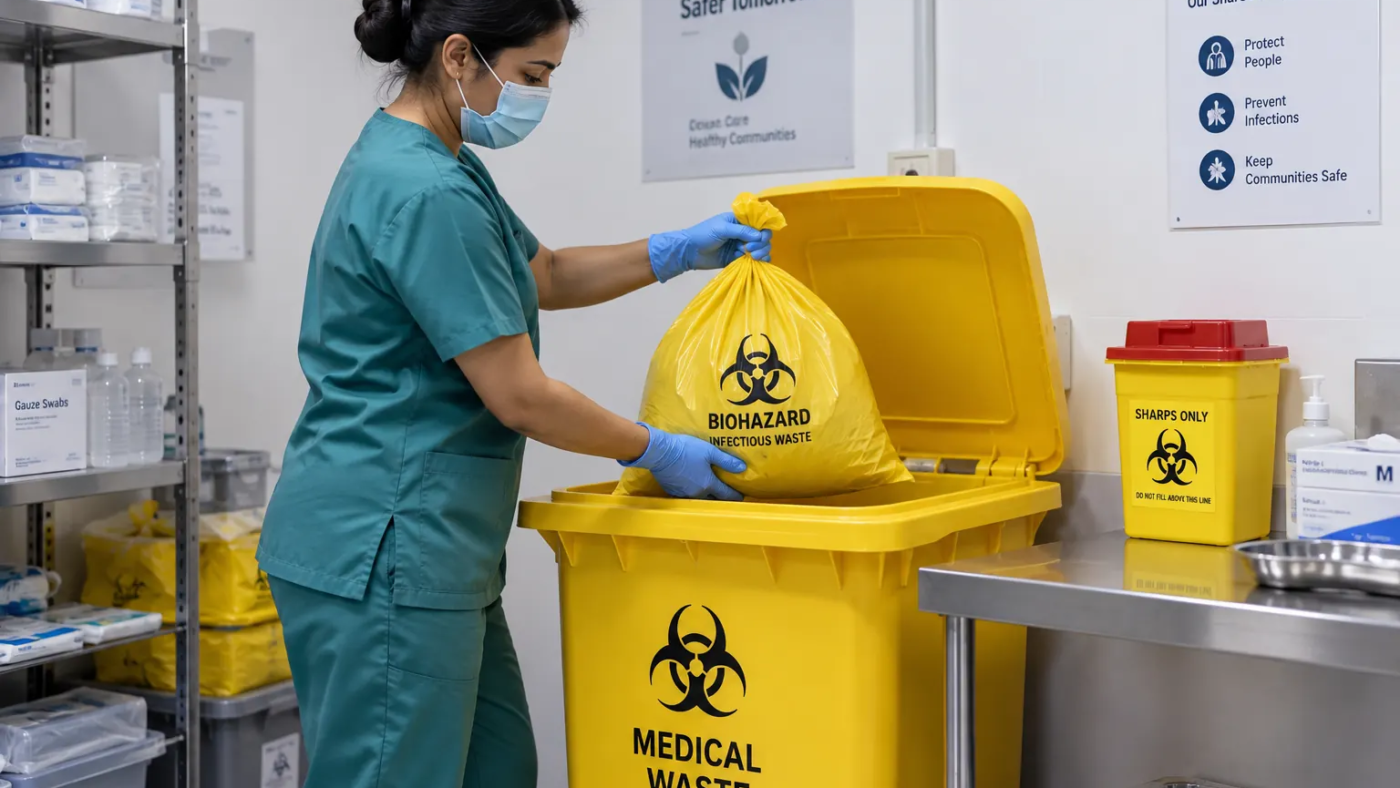
Medical waste removal Dubai regulations exist for a simple reason: healthcare waste is one of the most hazardous waste categories a business can generate, and mishandling it puts patients, staff, and the wider public at risk. Needles, contaminated dressings, expired pharmaceuticals, and pathological waste all require handling that goes far beyond standard commercial waste disposal.
For clinics, hospitals, dental practices, and laboratories operating in Dubai, understanding and following the regulations around medical waste isn’t optional. Non-compliance can result in fines, license suspension, and serious reputational damage. Here’s what every healthcare facility needs to know.
Why Medical Waste Removal in Dubai Is So Tightly Regulated
Unlike general commercial waste, medical waste can carry infectious agents, sharps injury risks, and hazardous chemical or pharmaceutical residues. Dubai Municipality and the Dubai Health Authority (DHA) enforce strict rules covering how healthcare waste is segregated, stored, transported, and disposed of because a single mishandled batch can expose sanitation workers, waste handlers, or the public to serious health risks.
These regulations apply to any facility that generates healthcare waste, including:
- Hospitals and private clinics
- Dental practices
- Diagnostic laboratories
- Veterinary clinics
- Aesthetic and cosmetic treatment centers
- Home healthcare providers
Proper Waste Segregation at the Source
Medical waste regulations require different categories of waste to be separated at the point of generation, not sorted later. Common categories include:
- Infectious waste items contaminated with blood or bodily fluids
- Sharps waste needles, scalpels, and other puncture-risk items
- Pathological waste tissues, organs, and body parts
- Pharmaceutical waste expired or unused medications
- Chemical waste lab reagents and disinfectants
- General non-hazardous waste packaging and non-contaminated items
Mixing these categories is one of the most common compliance failures inspectors flag
Color-Coded, Labeled Containers
Regulations require specific container types and color coding for each waste category typically yellow bags or bins for infectious waste, puncture-resistant sharps containers, and clearly labeled containers for pharmaceutical and chemical waste. Containers must be labeled with the biohazard symbol, waste type, and generation date where required.
Safe On-Site Storage Requirements
Medical waste can’t simply sit in a back room until collection day. Facilities are required to:
- Store medical waste in a designated, secure area inaccessible to unauthorized personnel
- Keep storage areas at appropriate temperatures to limit odor and microbial growth
- Limit on-site storage time before collection, particularly for infectious and pathological waste
- Prevent leakage, spillage, or pest access to stored waste
Licensed Transport and Chain-of-Custody Documentation
Medical waste removal Dubai rules require that only licensed, municipality-approved transporters handle the movement of healthcare waste from the facility to an approved treatment or disposal site. Facilities should maintain documentation for every collection, including:
- Waste manifest or tracking forms noting type and quantity collected
- Date and time of collection
- Transporter license details
- Confirmation of receipt at a licensed treatment facility
This chain-of-custody record is often requested during health authority audits.
Staff Training on Handling Procedures
Regulations typically require that staff who generate or handle medical waste receive training covering:
- Correct segregation procedures for each waste category
- Safe handling of sharps to prevent needle-stick injuries
- Proper use of personal protective equipment (PPE) during waste handling
- Emergency procedures for spills or exposure incidents
Untrained staff handling waste incorrectly is a common root cause of compliance violations, even when a facility has the right bins and containers in place.
Approved Treatment and Final Disposal Methods
Healthcare waste must be treated using approved methods commonly autoclaving, incineration, or chemical disinfection before final disposal, depending on the waste category. Facilities are generally required to use only licensed waste management providers who can demonstrate their treatment process meets Dubai Municipality and DHA standards.
Regular Compliance Audits and Record-Keeping
Beyond day-to-day handling, regulations expect healthcare facilities to maintain ongoing compliance records, including:
- Waste generation and collection logs
- Staff training records
- Contracts and licenses of waste management providers
- Incident reports for any spills or handling errors
These records are typically the first thing reviewed during a health authority inspection, and gaps here can trigger deeper scrutiny even when day-to-day handling is otherwise compliant.
What Happens If a Facility Doesn’t Comply
Non-compliance with medical waste regulations in Dubai can result in:
- Financial penalties from Dubai Municipality or DHA
- Suspension of operating licenses for repeated or serious violations
- Increased risk of infection or injury to staff and waste handlers
- Reputational damage if violations become public
Choosing a Licensed Medical Waste Removal Partner
Given the complexity of the regulations, most clinics and hospitals rely on a specialized waste management partner to handle collection, transport, and disposal in compliance with local law. When evaluating a provider, confirm they offer:
- Full municipality and DHA licensing for medical waste handling
- Segregated collection using compliant, color-coded containers
- Documented chain-of-custody for every collection
- Transparent reporting suitable for compliance audits
- Experience across hospitals, clinics, and laboratories of varying sizes
The Bottom Line
Medical waste removal Dubai regulations exist to protect patients, staff, and the public from the unique risks healthcare waste presents. Proper segregation, compliant storage, licensed transport, trained staff, and thorough record-keeping are what separate a compliant facility from one at risk of penalties or worse. For a broader look at how healthcare waste is classified and managed internationally, the World Health Organization’s healthcare waste fact sheet is a useful reference point.
If your facility hasn’t reviewed its medical waste procedures recently, a compliance check with a licensed provider is a reasonable place to start.
Who regulates medical waste removal in Dubai?
Medical waste handling in Dubai falls under the oversight of Dubai Municipality and the Dubai Health Authority (DHA), which set the standards for segregation, storage, transport, and disposal of healthcare waste.
What counts as medical waste in a clinic?
Medical waste includes infectious waste (blood- or fluid-contaminated items), sharps, pathological waste, pharmaceutical waste, and certain chemical waste generated during diagnosis, treatment, or lab work.
Can a clinic dispose of medical waste with regular commercial waste?
No. Medical waste must be segregated at the source and handled separately using licensed transporters and approved treatment methods mixing it with general waste is a common compliance violation.
How often should medical waste be collected from a facility?
Collection frequency depends on waste volume and category, but regulations generally require infectious and pathological waste to be collected before on-site storage limits are exceeded, often within a few days.
What should a facility check before hiring a medical waste removal company?
Confirm the provider holds valid Dubai Municipality and DHA licensing, uses compliant color-coded containers, provides chain-of-custody documentation, and has experience handling healthcare waste specifically not just general commercial waste.
Enron provides municipality-approved medical and hazardous waste removal services for hospitals, clinics, and laboratories across Dubai. Contact us to arrange a compliant waste management plan for your facility.
Leave A Comment