

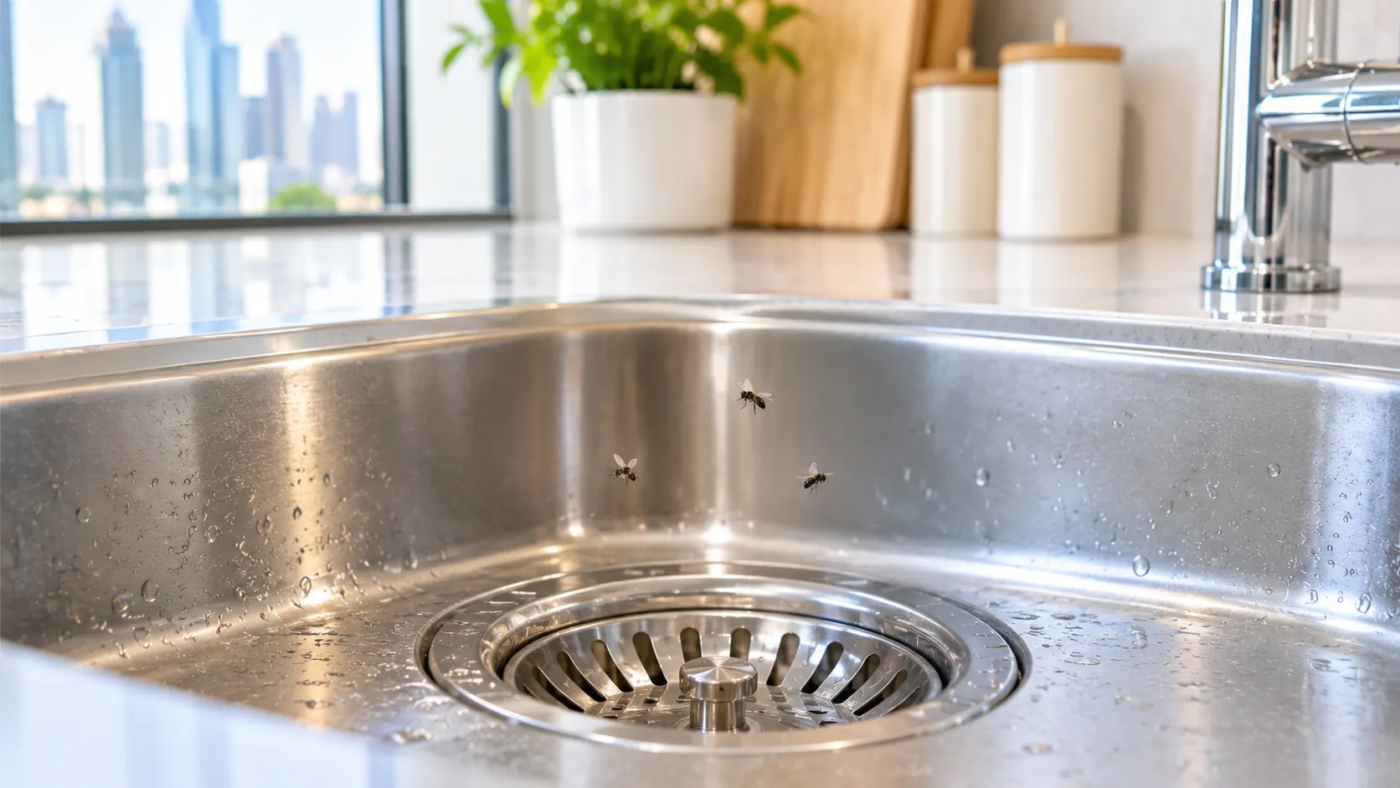
It is 9 pm. The kitchen is spotless, the dishes are done, and the bin is already out. Then you notice two or three tiny flies drifting around the sink, as if they live there.
Most people blame themselves at this point. They clean harder, spray more, and the flies are back the next evening.
Here is the good news. Small flies in the kitchen are almost never about a dirty counter. They are about water, slime, and food scraps hiding where you cannot see them. Once you know where to look, the problem is easy to fix. This guide shows you how, using checks and routines that suit Dubai homes.
First, Identify the Fly
A fix that works for one type can fail on another. So before you treat small flies in the kitchen, spend a minute looking closely at what you have.
Tiny, Tan, and Drawn to Sweet Things
If the flies are about 3 mm long, tan or light brown, and gather around your fruit bowl, they are fruit flies. They arrive with ripe mangoes, bananas, and dates. They also love the sugary film inside a bin or an unwashed juice glass.
Grey, Fuzzy, and Resting on Walls
Flies that sit on bathroom tiles with their wings folded like a tiny roof are usually drain flies. Under a bright light, their bodies and wings look hairy. They fly in short, clumsy hops and rarely go far from where they were born.
You may also hear them called moth flies or sewer flies. Both names point to the same clue: the source is somewhere wet and slimy.
Dark, Jerky, and Fast on the Floor
Small black flies that run across a surface instead of flying away are often phorid flies. They breed in rotting waste and damp soil, and they also appear near cracked or leaking pipes. If you suddenly see many of them, think plumbing first and cleaning second.
Where Small Flies in the Kitchen Really Breed
Flies need three things: moisture, warmth, and something rotting to eat. Dubai gives you the warmth for free. The rest hides in your pipes and corners. Ohio State University Extension points out that removing the breeding place is the most effective way to prevent these pests.
- The slime inside the pipe. Soap, grease, hair, and food particles form a thick film on the pipe wall, a few centimetres below the drain cover. Eggs are laid here, and larvae feed on it.
- A dry U-bend. Every sink, shower, and floor drain holds a small plug of water that blocks sewer air and pests. In a guest bathroom or maid’s room that nobody uses, that water evaporates within weeks. The door to the sewer line is then wide open.
- Balcony and laundry floor drains. They get wet often and are cleaned almost never.
- AC drip lines and fridge trays. Standing water mixed with dust is all a larva needs.
- Bin bottoms and wet sponges. One spoon of old juice, or a damp cloth left overnight, can feed a small colony.
- Overwatered plants. Soggy soil breeds its own tiny flies, which then wander into your kitchen.
- Slow leaks. A small drip under the sink keeps everything around it damp for months.
Why Small Flies in the Kitchen Are Common in Dubai Homes
A few local conditions explain why small flies in the kitchen are so common here.
- Many flats have a spare bathroom that is rarely used, so its trap dries out.
- Summer travel leaves whole homes empty for weeks.
- Strong AC creates condensation on lines and trays that stay damp.
- Shared buildings connect many units to the same drain stack, so one neglected flat can send flies to others.
Why Spraying Never Stops Small Flies in the Kitchen
Think of an iceberg. The small flies in the kitchen that you see are the adults, and they are the small part. The eggs, larvae, and pupae sit inside the slime, safe from any spray.
In warm weather, the cycle from egg to adult can take as little as one to two weeks, and each female lays dozens of eggs at a time. Kill ten today and a fresh batch is already on the way.
Bleach is another common trap. Entomologists at Virginia Cooperative Extension say that bleach and vinegar are not very effective against these pests. The University of Kentucky adds that the best control is to clean pipes and traps to remove slime, and that insecticides should never be poured down a drain.
Try the Overnight Cup Test
Do this before you clean, so you know which drain to treat.
- Wipe the area around the drain dry.
- Cover the drain with a clear cup turned upside down. You can also stick a strip of clear tape over the opening, sticky side facing down.
- Leave it overnight.
- In the morning, look inside the cup or at the tape.
Flies trapped there confirm that the drain is the nest, and that your small flies in the kitchen problem starts below the surface. Test every drain, including the shower, balcony, and laundry area. Often only one or two are guilty.
7 Easy Steps to Get Rid of Small Flies in the Kitchen
One clean is not enough to clear small flies in the kitchen. This kind of drain cleaning needs about a week, so that every new generation gets caught.
- Remove the food (Day 1). Throw out overripe produce, move fruit into the fridge, empty the kitchen bin, and rinse anything going into recycling.
- Scrub the drain (Day 1). Use a stiff bottle brush to scrub the pipe wall as far down as you can reach. Clean the underside of the drain cover too. This breaks the slime, and without it nothing else works.
- Add an enzyme cleaner (every night). Bio-enzyme gels feed on the organic film. Pour in the recommended amount before bed and leave it until morning.
- Flush with hot water (every morning). Use very hot tap water, but avoid boiling water if your pipes are PVC.
- Refill dry traps (Day 3). Run water in every unused sink, shower, and floor drain. A teaspoon of cooking oil on top of the water slows evaporation in drains you rarely use.
- Check for leaks (Day 4). Look under sinks, behind the washing machine, and around the dishwasher hose.
- Repeat the cup test (Day 7). If nothing is trapped, you have won. If small flies in the kitchen remain, read the section on professional help below.
Expert Tips
- Pick one day, such as Sunday, for a ten minute drain check every week.
- Clean the overflow hole in the basin with a thin brush. It is a hidden tunnel for slime.
- After any trip, run every tap and flush every toilet on your first day back.
- Keep kitchen hygiene simple: rinse the sink after cooking, cover fruit, and wash dishcloths daily.
- If small flies in the kitchen return after a week, check the drain you skipped.
- Place sticky traps near drains as a monitor. They show progress but do not cure the cause.
- In villas, ask your maintenance team to check outdoor inspection chamber covers for gaps.
Common Mistakes
- Spraying the air. It removes the flies you see for a few hours and leaves the nest untouched.
- Mixing chemicals. Never combine bleach with vinegar or acids. It releases harmful fumes.
- Cleaning only the kitchen. The real source is often the shower or balcony drain.
- Quitting after three days. Eggs already laid will hatch and restart the problem.
- Pouring boiling water into PVC pipes. It can soften joints and cause leaks.
- Ignoring the neighbours. In an apartment block, a persistent problem may come from a shared line.
Benefits of Fixing the Root Cause
When you get rid of small flies in the kitchen at the source, you gain more than a quieter home.
- Safer food. These flies move between drains, waste, and your plates, and they carry bacteria with them.
- Fresher air. Clean pipes mean fewer musty and sewer smells.
- Less wasted money. You stop buying sprays that never work.
- Early warning. A sudden group of flies can reveal a hidden leak before it turns into an expensive repair.
- More comfort. A home free of buzzing pests is easier to relax in, especially with children and elderly family members around.
When It Is Time to Call a Professional
Home cleaning solves most cases of small flies in the kitchen. But call an expert if:
- The flies return within a week of a thorough routine.
- You see them in several rooms at once.
- You notice a strong sewer smell or slow drains.
- You live in a shared building and suspect the source is outside your unit.
Professional pest control in Dubai uses drain inspection tools and targeted treatments that reach inside the pipes. If the problem has grown into a full fly infestation, a trained team can find the source in one visit instead of weeks of guessing.
At Enron, our pest control services cover homes, offices, and restaurants across the city. If you would like a full reset first, our house cleaning services in Dubai can deep clean your kitchen and bathrooms. You can learn why the two work best together in our guide on why cleaning and pest control work better together.
Struggling with other kitchen pests too? Read ants in your kitchen even though it is spotless. Business owners can also explore our waste management services to keep bins and waste areas under control.
Final Thoughts
Small flies in the kitchen are a sign of hidden moisture and buildup. They do not mean you are careless. Find the drain or damp spot that feeds them, then scrub, treat, dry, and repeat for a full week.
If small flies in the kitchen keep returning despite your best effort, do not wait for the problem to grow. A quick inspection can save you weeks of frustration and give you a clean, fly free home again.
Frequently Asked Questions
Why do I still see tiny flies when my kitchen is clean?
Because the breeding spot is usually inside a drain or a damp hidden area, not on the surface. Wiping counters never reaches the eggs and larvae living in pipe slime.
How long does it take to get rid of them?
With nightly scrubbing and enzyme treatment, most homes see a big drop within seven to ten days. Keep going for the full week so new eggs do not restart the cycle.
Are tiny flies in the bathroom harmful?
They do not bite, but they travel from drains and waste to your surfaces and can carry bacteria. They also signal buildup, a dry trap, or a leak that needs attention.
Do vinegar and baking soda work?
They can freshen a drain for a short time, but they do not remove the thick film where larvae live. A brush and an enzyme cleaner work much better.
When should I call a pest control company?
Call if the flies return within a week of deep cleaning, appear in many rooms, or come with sewer smells. These signs often point to a deeper drainage problem.
Leave A Comment