

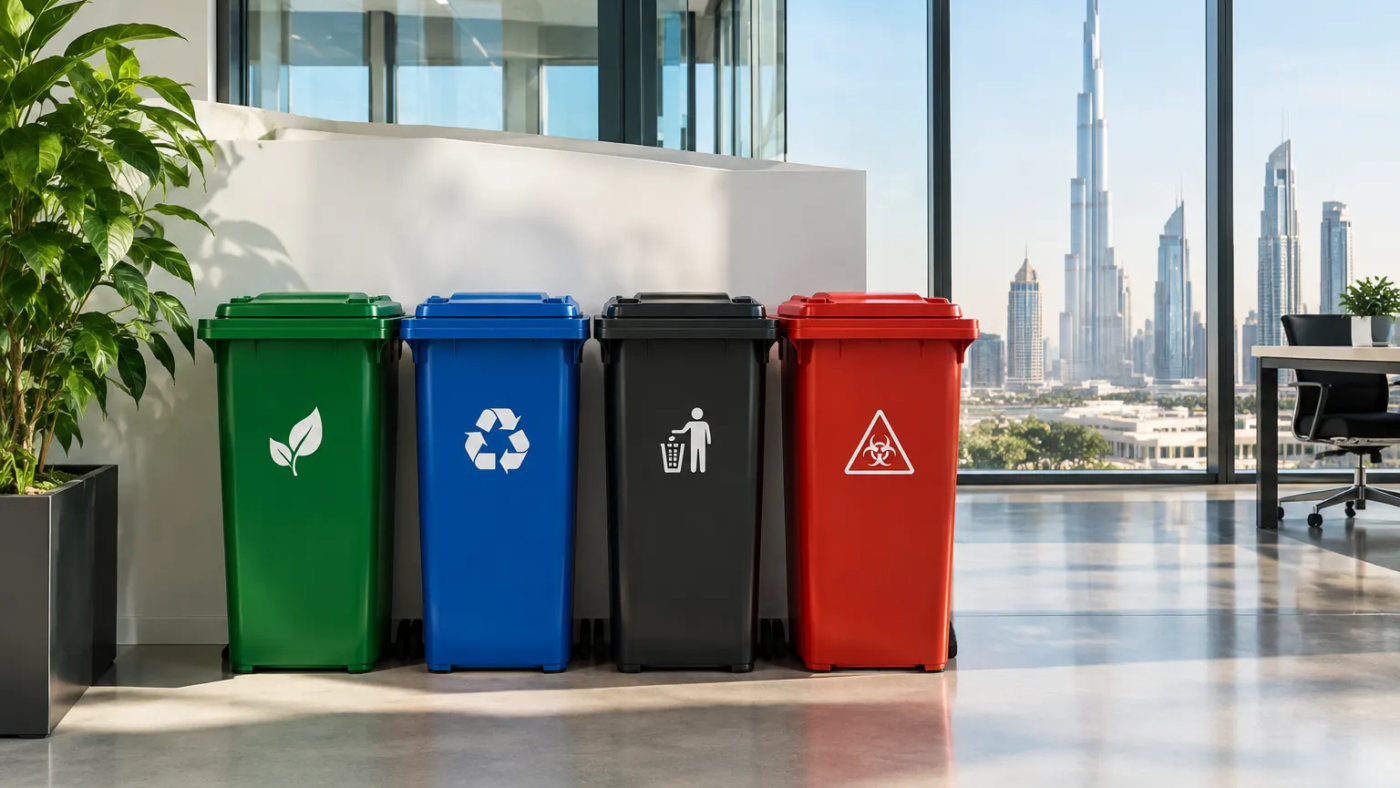
Waste segregation Dubai businesses rely on has moved from an operational afterthought to a genuine business priority, as the city continues pushing toward its sustainability goals. For companies across the city, proper waste segregation isn’t just about compliance anymore it’s becoming a marker of responsible, forward-thinking business practice. Getting waste segregation for Dubai businesses right from the start saves both money and compliance headaches down the line. Yet many businesses still treat waste as a single, undifferentiated stream, missing out on the environmental, financial, and reputational benefits that come with doing it right. Here’s why waste segregation matters, and how the right partner can make it effortless.
What Is Waste Segregation for Dubai Businesses, Exactly?
Waste segregation is the practice of separating waste at the point of disposal based on its type and disposal method rather than throwing everything into a single bin. Typically, this means dividing waste into categories such as general/non-recyclable waste, recyclables like paper, cardboard, plastics, glass, and metals, organic/food waste including kitchen scraps and biodegradable material, and hazardous waste such as chemicals, batteries, and electronics requiring special handling. For businesses, this segregation needs to happen consistently across offices, kitchens, warehouses, and production areas which is where a lot of companies struggle without a structured system in place. Effective waste segregation for Dubai businesses requires more than good intentions; it requires a workable system.
Why Dubai Businesses Can’t Afford to Ignore This
Regulatory Compliance Is Tightening for Waste Segregation Dubai Businesses
The Dubai Municipality has been steadily increasing regulations around commercial waste management as part of the broader UAE sustainability agenda, including initiatives tied to the UAE’s National Waste Management Strategy. Businesses that fail to segregate and dispose of waste correctly risk fines, compliance issues, and reputational damage particularly in industries like hospitality, food service, and manufacturing where waste output is high.
It Directly Impacts Operating Costs
Improper waste segregation often means businesses pay more than necessary for waste disposal. Recyclable materials sent to general waste streams add unnecessary volume to landfill-bound waste, which is typically the most expensive disposal category. Proper segregation reduces the volume of waste requiring costly disposal methods, and in many cases, recyclable materials can even generate value rather than cost.
Sustainability Is Now a Business Expectation
Clients, partners, and increasingly employees expect businesses to operate responsibly. Companies with visible, well-managed sustainability practices including proper waste management are viewed more favorably by clients and partners, particularly in B2B relationships where corporate responsibility influences vendor selection. Reports from organizations like the World Economic Forum consistently point to waste management as a growing factor in corporate ESG scoring.
It Reduces Environmental Impact Significantly
When waste isn’t segregated, recyclable and organic materials often end up in landfills, where they take far longer to break down and contribute to greater environmental harm than if they’d been properly processed. Proper segregation ensures materials are directed to recycling facilities, composting programs, or specialized treatment centers, meaningfully reducing a business’s environmental footprint.
It Protects Against Contamination and Hazards
Mixing waste types can create genuine safety issues. Hazardous materials mixed with general waste can contaminate entire waste loads, sometimes rendering otherwise recyclable materials unusable. In workplaces handling chemicals, electronics, or medical materials, improper segregation can also create direct safety risks for staff and waste handlers.
Common Challenges With Waste Segregation for Dubai Businesses
Even businesses that want to do the right thing often run into practical obstacles:
- Lack of clear systems employees don’t know what goes where without proper labeling and bin placement
- Inconsistent staff habits without training, segregation habits vary widely across departments
- Space constraints multiple waste streams require more bins and storage space than many properties are designed for
- No dedicated collection process segregated waste is meaningless if it all gets combined again during collection
- Time and resource pressure businesses focused on core operations often deprioritize waste management systems
This is typically where things break down not because businesses don’t care, but because they lack a structured, professionally managed system.
How Enron Supports Waste Segregation for Dubai Businesses
Enron Cleaning Company, widely regarded as the Best Cleaning Company in Dubai, works with businesses across the city to build waste management systems that are practical, compliant, and genuinely sustainable without adding complexity to daily operations.
Waste Stream Assessment
Understanding what type and volume of waste a business generates is the first step to designing an effective segregation system. Enron assesses your operations to identify the waste categories most relevant to your business.
Customized Bin Systems and Signage
Clear, well-labeled bins placed in the right locations make it easy for employees to segregate waste correctly without needing extensive training or reminders.
Staff Guidance and Onboarding Support
A system only works if people use it correctly. Enron supports businesses with practical guidance to help staff understand and adopt proper segregation habits from day one.
Scheduled, Reliable Collection
Segregated waste needs to stay segregated through to disposal. Enron manages consistent collection schedules that ensure recyclables, organic waste, and general waste are actually processed as intended not recombined during pickup.
Compliance-Focused Processes
With Dubai’s regulations evolving, having a waste management partner who understands current compliance requirements takes the guesswork out of staying on the right side of regulations. Businesses can also refer to the Dubai Carbon Centre of Excellence for broader sustainability benchmarks relevant to waste practices.
The Bigger Picture: Waste Management as a Business Asset
Businesses that get waste segregation right don’t just avoid fines or reduce costs they build a foundation for broader sustainability practices that resonate with clients, partners, and employees. In a business environment where corporate responsibility increasingly influences decisions, a well-managed waste system is a small operational change that reflects a much larger commitment to doing business responsibly.
Making Waste Segregation for Dubai Businesses Effortless
Waste segregation doesn’t have to be a burden on your operations. With the right systems, signage, and collection processes in place, it becomes a seamless part of daily business one that pays off in reduced costs, regulatory peace of mind, and a stronger sustainability profile. Getting waste segregation for Dubai businesses right isn’t complicated it just needs the right system and the right partner.
Enron Cleaning Company helps Dubai businesses design and manage waste segregation systems that actually work, from initial assessment through to ongoing collection and compliance support. [Get in touch] to find out how a tailored waste management plan can fit your business.
Is waste segregation legally required for businesses in Dubai?
Requirements vary by industry, and regulations are tightening across Dubai. Working with a partner like Enron keeps you compliant without the guesswork.
What types of waste should my business be segregating?
At minimum: general waste, recyclables, organic waste, and hazardous materials. The exact mix depends on your business type.
Will waste segregation actually save my business money?
Yes. Separating recyclables reduces costly landfill-bound waste and can even generate value in some cases.
How do I get my employees to actually follow the segregation system?
Clear labeling and simple bin placement do most of the work. Enron sets up systems that are easy to follow from day one.
Can Enron handle waste segregation for businesses of any size?
Yes. Enron builds segregation and collection systems tailored to your business, whether it’s a small office or a large facility.
Leave A Comment